What Is Shockwave Therapy
Extracorporeal Shockwave Therapy (ESWT) is a non-invasive treatment that delivers controlled pressure waves to a targeted area. It is most often considered for persistent tendon and soft-tissue problems that have not responded fully to usual conservative care.
Conditions for which shockwave may be considered include plantar fasciitis, Achilles or patellar tendinopathy, tennis or golfer’s elbow, greater trochanteric pain and selected shoulder problems. Suitability is assessed individually because shockwave is not appropriate for every patient or every condition.
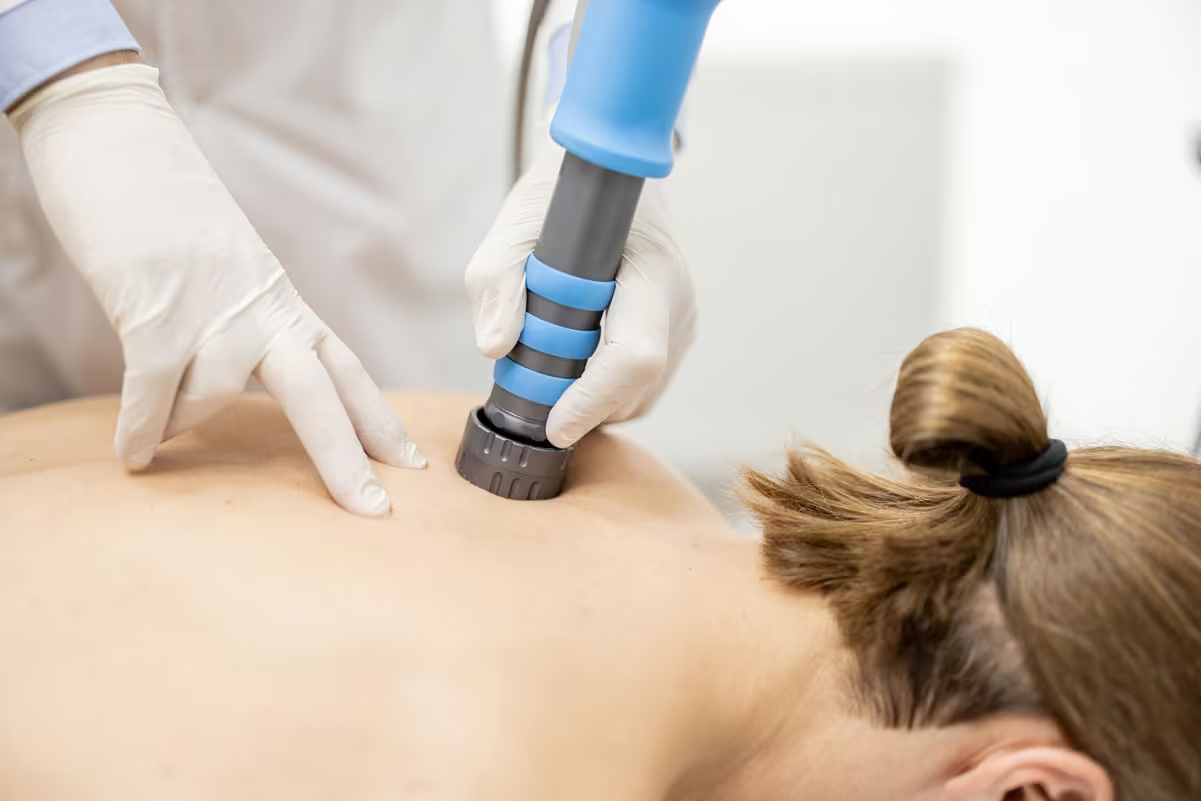
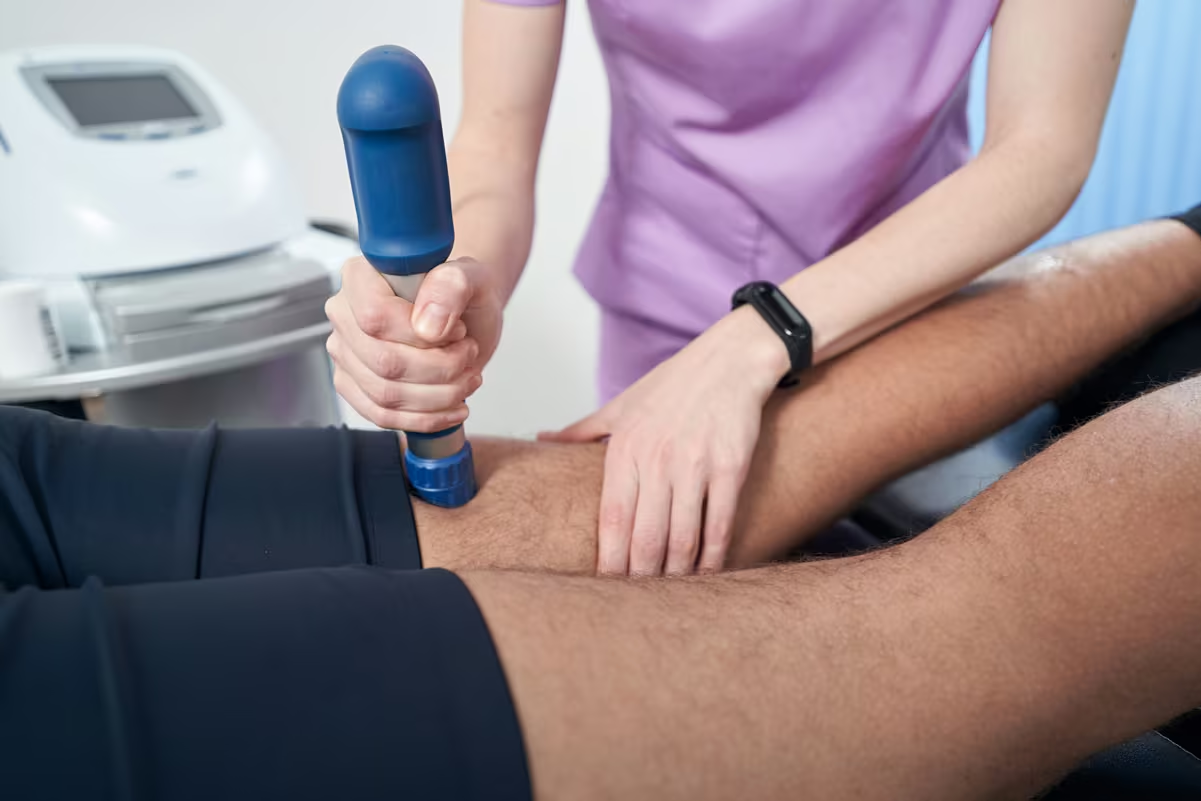
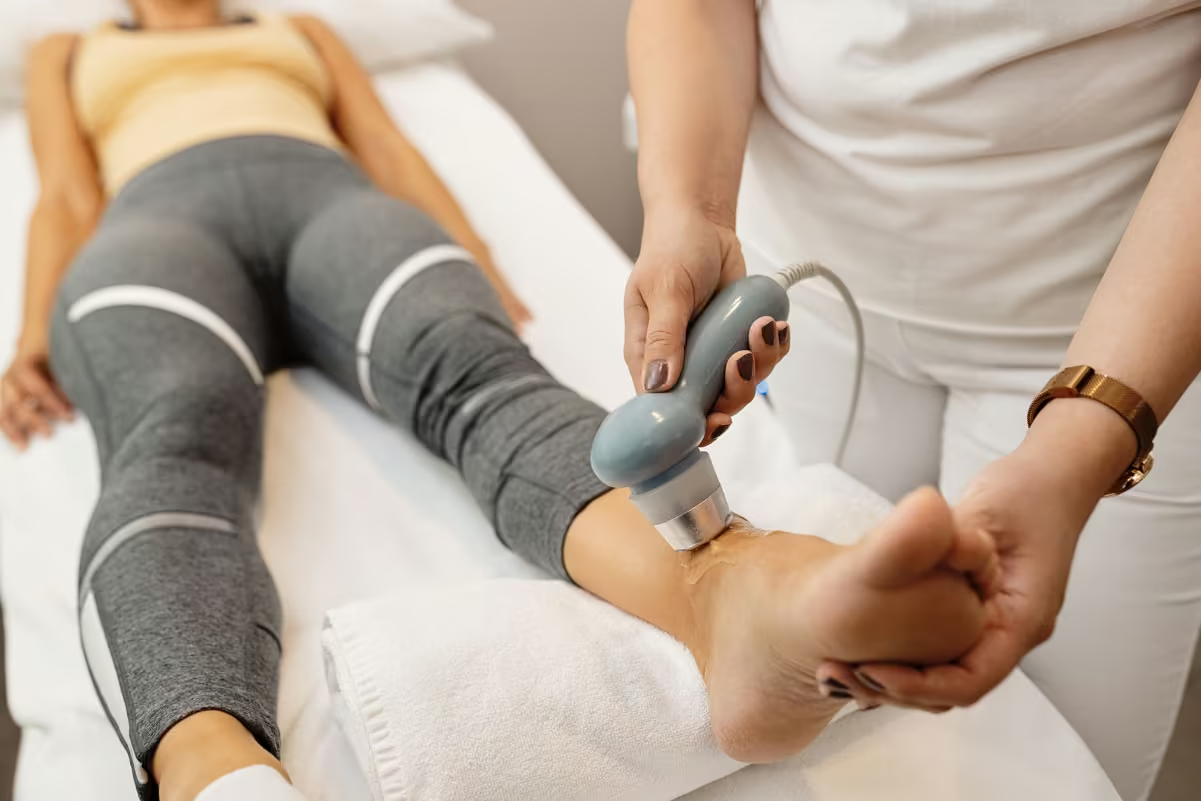
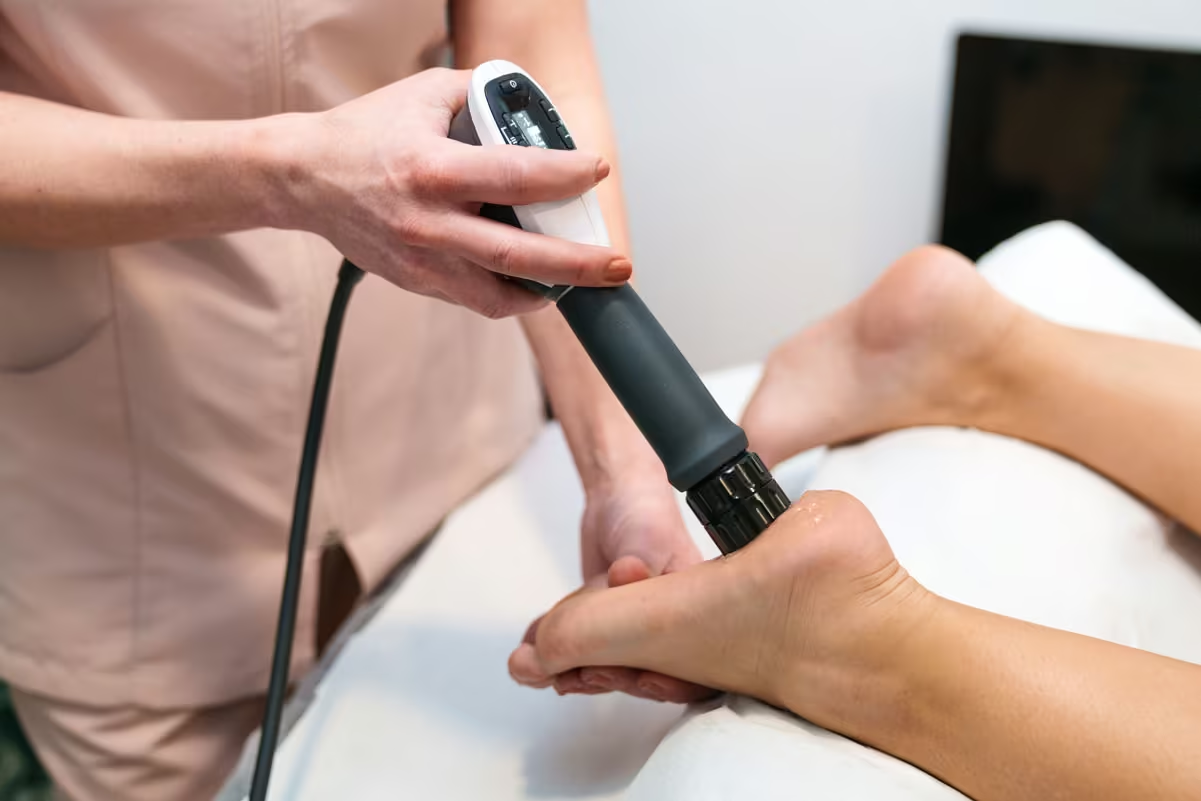
During treatment, a handheld applicator is placed over the affected area. The sensation can be uncomfortable, but the intensity is adjusted to keep it tolerable. A course commonly involves several sessions, usually combined with appropriate rehabilitation and advice. Response and the number of sessions vary according to the diagnosis, duration of symptoms and individual factors. Your practitioner will explain expected benefits, possible side effects, alternatives and any reasons why treatment should not proceed before obtaining consent.
Which Conditions Can Shockwave Help With?
- Achilles tendinopathy
- Plantar fasciitis (heel pain)
- Patellar tendinopathy (jumper’s knee)
- Medial tibial stress syndrome (shin splints)
- Tennis (or golfers) elbow
- Sub-acromial pain syndrome(rotator cuff pain)
- Frozen shoulder
- Greater trochanteric pain syndrome (outer hip pain)
- Lower back pain
How Successful Is Shockwave Therapy?
Results vary depending on the condition being treated, ranging between 60-90% response rate. The benefit over other interventions, e.g. chronic tendinopathy and plantar fasciitis, is that long term outcomes (1 year +) are excellent, whereas most other interventions only work for a short period. Combining appropriate rehabilitation magnifies the effects and further reduces the chances of relapse. Shockwave Therapy is clinically proven, recognised by top orthopaedic hospitals and used by high-profile professional sports bodies.
Is Shockwave Painful?
It is very different to ‘ultrasound’ and you will feel some discomfort, but this should be very tolerable.
“(ESWT) offers two main advantages over traditional surgical methods: fewer potential complications and faster return to normal activity.” (FDA2007)
How Many Sessions Are Needed?
The number of treatment sessions will vary depending on the type of condition, the length of time you have had it for and the type of Shockwave Therapy selected for treatment. As a general rule, 3 to 6 treatment sessions are advised at weekly intervals. Initial pain relief is followed by an enhanced healing reaction that continues beyond your final session.
Not all Shockwave is the same At South oxhey osteopaths, we use the best available technology – Swiss engineered Storz devices, used by the majority of experts, major NHS hospitals and elite sporting clubs across the world. Many devices are now coming to market that have not been supported by research, externally validated, or been CE marked for safety and effectiveness.
Can Shockwave Therapy Treat Old/Persistent Injuries?
Yes, it can treat both long-term chronic conditions and newer injuries. There is substantial evidence to show that Shockwave Therapy can achieve great results even in conditions that have been present for many years.
Is Shockwave Therapy Safe?
Yes, it has NICE guidance for a large number of indications and is used within the NHS. Shockwave Therapy performed by clinicians and appropriately trained health professionals is largely risk-free.
What Are The Advantages of Shockwave Therapy?
Shockwave Therapy can be used in chronic conditions where other options have failed, instead of surgery or where surgery isn’t an option (e.g. due to certain health conditions or medications).
- Non-invasive
- No anaesthesia required
- No surgery scars
- No medication involved
- Proven to be safe
- Significant clinical benefit – often within a few weeks
- Fast treatment times