Why People Come To See Us
Your first appointment begins with a conversation about the problem that brought you to the clinic. We will ask about your symptoms, when they began, what makes them better or worse, your medical history, medication, previous injuries or operations, work, sport and daily activities.
A physical examination will then help the practitioner understand how you move and which tissues or joints may be involved. This may include observing posture and movement, checking joint mobility, muscle strength, reflexes or sensation, and carrying out relevant orthopaedic or neurological tests. You will be told what the examination involves and can ask questions or decline any part.
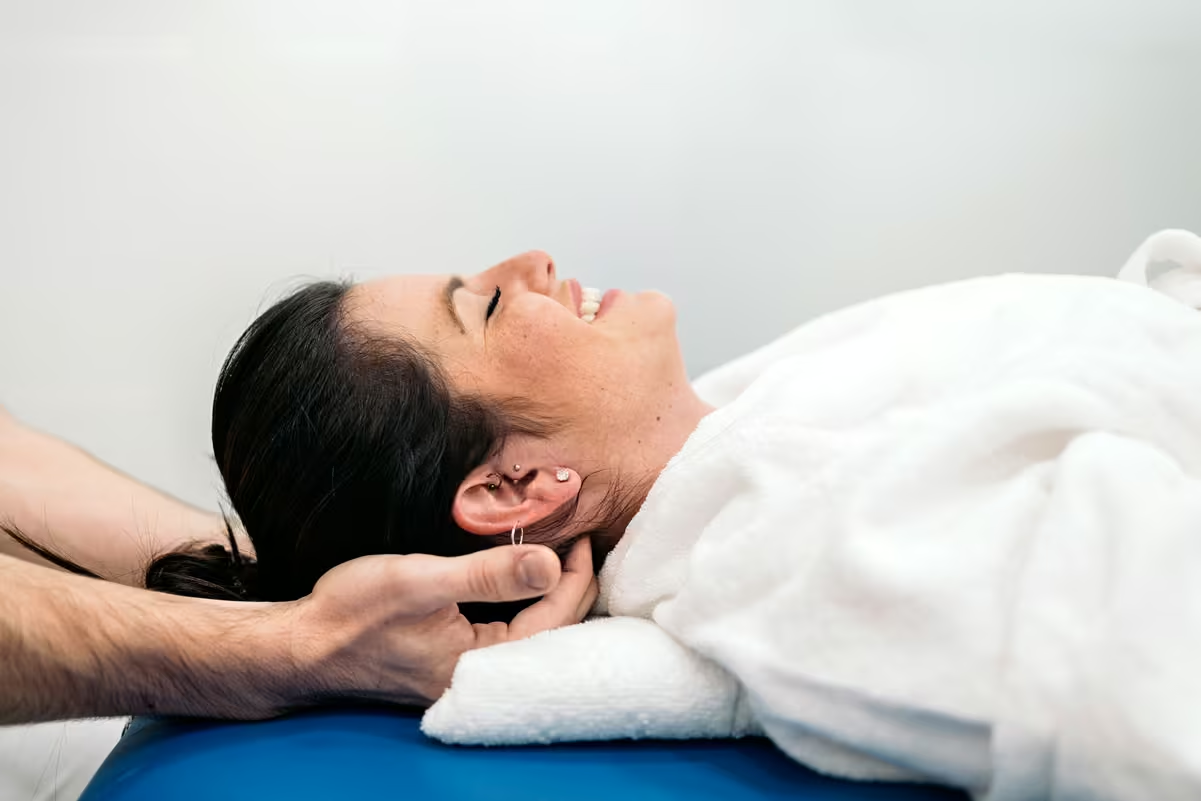
The practitioner will explain the findings, whether treatment is appropriate and the proposed plan, including expected benefits, material risks and alternatives. With your consent, treatment will usually begin at the first appointment. Techniques vary according to the profession, the clinical findings and your preferences, and may include soft-tissue work, mobilisation, stretching, gentle articulation or manipulation. Advice on movement, exercise and self-management may also be provided.
Some people experience temporary soreness or tiredness after hands-on treatment. If a reaction concerns you or persists, please contact the clinic. Wear comfortable clothing. You may be asked to remove outer garments for parts of the examination or treatment, but your dignity and comfort will be respected and techniques can be adapted. You are welcome to bring a chaperone; a parent or appropriate adult should normally accompany children under 16.
The Process
The Consultation
The first thing we need to do is to build up a picture of your problem: where it is, what it feels like; what makes it better, what makes it worse. So, we begin to get an idea of where the symptoms are coming from, what tissues are involved, what kind of process might be occurring.
We ask about the history of your problem – is it recent, perhaps due to an injury; is it a recurrence of an old problem; is it something related to work or leisure activities? We like to know about your past medical history, including current treatment or medication. If you have had some trauma in the past, physical or emotional, or an operation, is there still some evidence of your body’s adaptation to those events?
It is like trying to put together a version of your story, so that between us we can make sense of the condition that brought you to see us.
Examination
The next step is to conduct an examination so that we can test aspects of the story. This enables us to exclude certain possibilities, and perhaps to discover new pieces of evidence to make the picture clearer. We may perform some tests such as checking reflexes or skin sensation, as well as more obvious mobility tests or muscle strength.
This process often flows naturally into the beginning of treatment, and we try to explain to you what we do and why.
Treatment
The type of treatment we might use depends on many factors. The more physical treatment such as massage or manipulation may not be suitable for some people. If, for example, there is inflammation present in the tissues, those tissues may not respond well to direct work, and we may prefer to work on surrounding areas to promote better circulation throughout the body to enhance self-healing. More subtle techniques can be very effective and may have a cumulative effect over several sessions.
Further Treatment
We normally expect to see our patients on a number of occasions, because we are often dealing with conditions which may have taken a long time to develop. You might not always experience immediate changes, but sometimes our patients surprise us!
Reactions
There is always a chance that you might have a reaction to the treatment: this might be an inevitable result of change taking place – change is not always comfortable. But if you are concerned or if the reaction goes on for too long, please get in contact with us, don’t suffer in silence!
Clothing
On your first visit, and when your osteopath needs direct contact with the skin in techniques using manipulation and massage, you will need to remove outer clothing. If this is too embarrassing, or if you have religious prohibitions about it, just let us know and we’ll change what we do to accommodate you. With Cranial osteopathy treatment can easily be given with the patient fully clothed.
Chaperones
If you’d like to bring someone with you, we are perfectly happy. Our own receptionists are usually too busy to be involved in this way, but a family member or friend is perfectly acceptable.
For children under 16 we would normally expect a parent or similar to be present, but this is negotiable, depending on the age and ‘competence’ of the child.